
Add Row
Add Element
cropper
update
BuildingConstructionTrade |a CapidHouser.com Media Site
update
Add Element
  • Home
  • Categories
    • roofing
    • loft conversion
    • Residential Buildings
    • office building
    • Plastering Rendering Screeding
    • Windows Glazing Doors
    • building machinery
    • groundworks
    • Building Construction Techniques
    • DIY
  • Scaffolding
  • Skip Hire Waste Removal
  • Home Extensions
  • Building Protective Coatings
  • Garden Rooms
  • Driveways
  • Building & construction marketing
  • featured business profiles
  • Architecture And Design
  • Materials
  • commercial construction
June 03.2025
2 Minutes Read

Discover How Liebherr Cranes Are Elevating Bratislava's Skyline

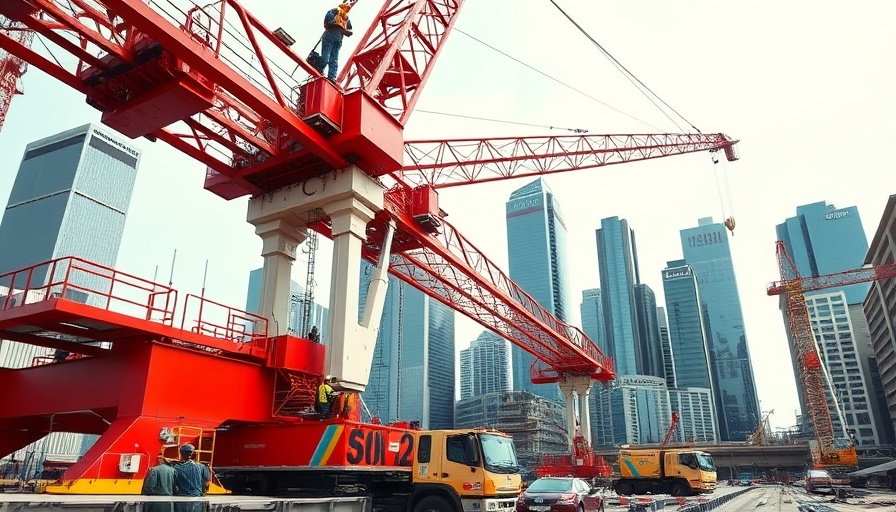
Liebherr crane assembly in urban construction site with skyscrapers.

A New Architectural Marvel on the Rise

In Bratislava, Slovakia, a symbol of modern architecture and innovation stands in the making—the final Skypark Tower. Utilizing the cutting-edge technology of Liebherr cranes, this construction project features a collaboration of three different crane models, highlighted by the introduction of the 190 HC-L crane, the first of its kind in Slovakia. This magnificent tower, designed by the world-renowned architect Zaha Hadid, will soar to a height of 120 meters upon completion, boasting 30 floors of modern office space with breathtaking views.

The Role of Liebherr Cranes in Efficient Construction

The use of Liebherr cranes is central to the efficient execution of the Skypark Tower project. Starting in mid-2024, the cranes have facilitated smooth operations, accommodating various construction requirements. The 190 HC-L crane features a remarkable 55-meter jib and initially reaches a height of 60 m, eventually climbing to a total of 145 m. Alongside, the cranes including the 150 EC-B and the 110 EC-B demonstrate Liebherr's commitment to superior performance and modular adaptability, factors vital to complex construction projects.

Transforming Skylines Through Urban Development

The Skypark Tower isn't merely a beautiful structure; it is a part of a wider urban development initiative aimed at revitalizing Bratislava's landscape. The project encompasses new residential and commercial areas, along with substantial green spaces, aiming to create an inviting public environment. Once completed, the Skypark Tower is expected to become a defining feature of the Bratislava skyline, adding to the city’s contemporary urban fabric.

A Landmark Designed with Sustainability in Mind

Beyond its aesthetics, the tower has been designed with sustainability at its forefront, catering to the requirements of international companies seeking modern office environments. Covering approximately 55,000 square meters, the Skypark Tower promises to deliver office spaces reflecting the highest sustainability standards, making it a preferred choice for businesses.

Investing in the Future of Bratislava

As the construction of the Skypark Tower progresses, building companies and stakeholders are encouraged to observe the integration of advanced machinery and innovative architectural designs. Projects like this not only enhance city experiences but also signal future growth and investment opportunities in urban redevelopment.

building machinery

8 Views

0 Comments

Write A Comment

*
*
Related Posts All Posts
02.07.2026

Exploring the Impact of the 33rd Annual Florida Auction on Building Companies

Update Auction Extravaganza in Florida: Alex Lyon & Son Event The recent 33rd Annual Florida Auction hosted by Alex Lyon & Son was a remarkable gathering for construction and machinery professionals. Drawing participants from across the country, the event served as a melting pot for buyers and sellers within the construction industry. Held in a vibrant atmosphere, the auction not only showcased an extensive array of machinery but also provided a platform for networking among industry leaders and emerging entrepreneurs. A Variety of Equipment on Offer At this year's auction, attendees had access to a diverse selection of equipment, ranging from excavators to loaders, catering to various construction needs. This extensive inventory supports the belief that well-organized auctions like this one provide essential opportunities for construction companies looking to enhance their equipment stock without the overhead of brand-new purchases. Such auctions have proven to be a practical solution for companies wanting to stay competitive in the fast-paced construction landscape. The Role of Auctions in Building Business Opportunities Participating in construction equipment auctions serves not just as a means to acquire machinery but also fosters valuable connections in the industry. Similar to the events hosted by Ritchie Bros. and Yoder & Frey, bringing together a plethora of equipment buyers enhances competition and drives prices to fair market rates. Moreover, the flexibility of bidding online and in-person creates numerous opportunities for various stakeholders, from individual contractors to large construction firms. The Future of Equipment Auctions Looking ahead, machine auctions are anticipated to evolve with advancements in technology and changing market demands. Construction companies are increasingly turning to these auctions due to their efficiency and value-driven approach. As cities and regions expand, the demand for updated techniques and machines will continue to thrive, making these auctions pivotal for future business growth. Whether you’re a budding contractor or an established firm, staying informed about upcoming auctions can significantly impact your project’s success. These events are not just places to buy equipment; they represent a dynamic marketplace where ideas and innovations converge. Keep an eye on upcoming auctions to bolster your competitive edge!

02.06.2026

MassDOT's $303M Rourke Bridge Replacement: What Building Companies Need to Know

Update MassDOT Kicks Off $303M Rourke Bridge Replacement Over Merrimack The Massachusetts Department of Transportation (MassDOT) has initiated the Rourke Bridge replacement project in Lowell, aiming to enhance mobility and safety across the Merrimack River. This ambitious $303 million endeavor is being managed by Skanska USA Civil and is projected to significantly improve the movement of vehicles, pedestrians, and cyclists by the time it’s completed in 2030. Building the Future: Key Features of the New Rourke Bridge The new Rourke Bridge will span a total length of 1,278 feet and a width of 84 feet. It will consist of seven spans, providing two travel lanes in each direction, along with sidewalks and designated bike paths. This structure aims to accommodate the current traffic demand, which sees approximately 27,000 vehicles daily. Moreover, the bridge will adhere to modern ADA standards, ensuring accessibility for everyone. Environmental Sensitivity From the Get-Go Careful consideration has gone into minimizing environmental impacts. The design and construction phases are being executed with a focus on preserving the ecological integrity of the Merrimack River. MassDOT is coordinating efforts to maintain rowing lanes alongside construction activities to mitigate disruptions for local water sport enthusiasts. Engagement: Keeping the Community Informed MassDOT has actively sought public involvement throughout the planning and construction process. To date, they have held a series of public meetings aimed at informing the community on project developments and addressing concerns. Traffic disruptions have been carefully managed, ensuring that minimal inconvenience is caused during construction phases. The Path Forward: What Businesses Need to Know For companies in the construction and building sectors, projects like the Rourke Bridge replacement are crucial indicators of infrastructure investment and development trends. As construction continues, businesses can anticipate increased demand for roadwork materials and machinery, which could present new opportunities for suppliers and manufacturers. Increased traffic flow and improved connectivity in the region will also likely have beneficial implications for local commerce once completed. For those invested in building infrastructure, the Rourke Bridge serves as an exciting opportunity to stay abreast of best practices and innovations in modern construction. With state-of-the-art engineering and community-focused designs at play, the project exemplifies growth that not only addresses current needs but also anticipates future demands. As we follow this impactful project, companies are encouraged to engage with local construction networks and keep an eye on similar projects. This engagement will help prepare them for the shifts in demand that will arise as new and improved infrastructures develop across the region.

02.05.2026

Build America Update Takes Effect: What Construction Companies Need to Know

Update Major Changes Ahead for Federal Aid Highway ProjectsThe recent update from the Federal Highway Administration (FHWA) on the Build America, Buy America Act is set to create substantial shifts in how construction projects are executed across the United States. Starting in 2025, the elimination of waivers for manufactured products will require projects funded by federal aid to primarily source materials domestically, a move that aims to invigorate the American manufacturing sector.Understanding the Implications of the UpdateUnder the new guidelines, manufacturers must ensure that at least 55 percent of the components used in their products are domestically sourced. This change has sparked diverse reactions across the construction industry, with some experts like Lane Kimble from the Wisconsin Transportation Builders Association warning of rising costs—estimating a potential impact of $8.5 billion over the next decade due to these stricter regulations.Balancing Domestic Production with Project TimelinesAs the FHWA aims to bolster domestic manufacturing, concerns arise about the timeliness and feasibility of compliance. Sean McMaster, the FHWA Administrator, emphasizes the need for a balanced approach that limits waivers strategically. This could mean significant adjustments for contractors, who may face challenges in documentation and certification for compliance, complicating their project timelines and budgets.Why This Matters to the Construction IndustryThe construction sector stands at a crossroads. With more stringent requirements to use domestically produced materials, contractors must adapt to what could be a slippery slope of increased costs and delays. These developments, while promoting local manufacturing, also risk burdening smaller firms that may struggle with such transitions amid already tight profit margins.Engaging with the ChangesFor those in the building and construction industry, being aware of these regulatory shifts is crucial. The adjustments outlined can impact everything from bidding processes to project management strategies. Engaging proactively with the FHWA and staying updated on subsequent developments will be essential for navigating this evolving landscape.

Terms of Service

Privacy Policy

Core Modal Title

Sorry, no results found

You Might Find These Articles Interesting

T
Please Check Your Email
We Will Be Following Up Shortly
*
*
*